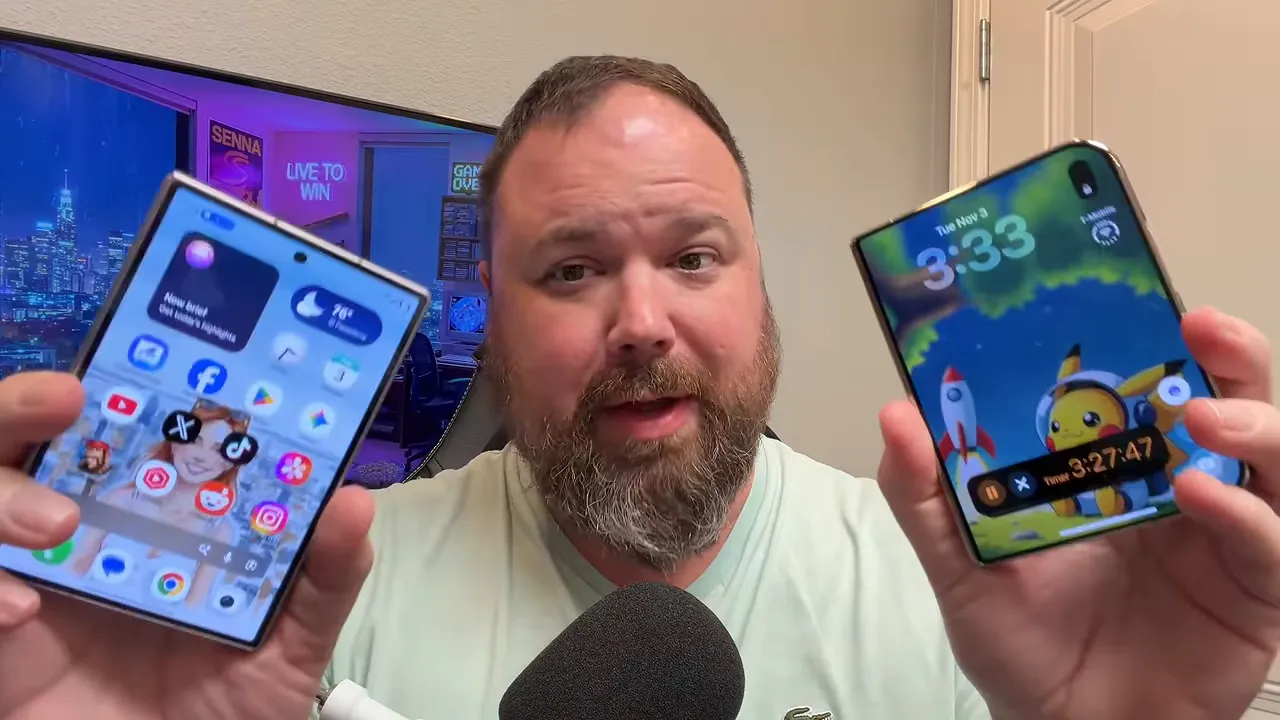
I think the Samsung Galaxy Z Fold 8 is better than the iPhone Duo. I also think that matters a lot less than the endless comparisons would have you believe.
That is not a knock against Apple. After more than a week with the Duo, I have enjoyed it considerably more than I expected to, even with how much I love the Fold 8. Apple has made a good folding phone, and for a whole lot of people, the most important thing about it is simple: it is finally a folding iPhone.
Those people were not necessarily waiting for Samsung to make a better foldable. They were waiting for Apple to make one. That changes the whole conversation.
Key Takeaways
- I prefer the Galaxy Z Fold 8 overall for its ergonomics, haptics, productivity, and software refinement.
- The iPhone Duo delivers useful strengths, including Pencil support, better speakers, and an effective matte display.
- Apple needs to improve the interface, app optimization, authentication, and confidence in long-term durability.
- A folding iPhone gives buyers more choice without diminishing what Samsung’s foldables already offer.
Why I Still Prefer the Galaxy Z Fold 8
If you want my overall pick between these two phones, it is the Z Fold 8. There are several parts of the experience that I prefer:
- Haptics: Samsung’s feedback feels better to me.
- Ergonomics and design: I prefer how the Fold is laid out, particularly the volume button placement.
- Durability confidence: I feel less worried about something going wrong with Samsung’s phone.
- Productivity: Having Samsung DeX is a meaningful advantage.
- Software refinement: Samsung’s foldable experience feels more polished overall.
That last point should not surprise anybody. Samsung has spent years working on folding phones. Android has been adapting to folding displays, and Samsung has continued refining its own approach through One UI. That experience shows up in everyday use.
People sometimes argue that comparing Apple’s first generation with Samsung’s eighth generation is unfair. I do not really buy that. Samsung is also trying something different with this passport-style Fold design, but the generation numbers are not the deciding factor anyway.
These are the phones available right now, competing for your money and your time. You are buying a product, not grading a company’s homework. Apple deserves credit for a strong first attempt, but that does not mean its phone should be exempt from comparison.
What Apple Got Right With the iPhone Duo
Preferring the Fold 8 does not mean overlooking what Apple accomplished. There is a lot here that I genuinely like, and some of it is better than Samsung’s approach.
Apple Pencil support and a useful matte display
Apple Pencil support is a real win. It gives the larger interior screen another useful purpose, and I am glad Apple included it.
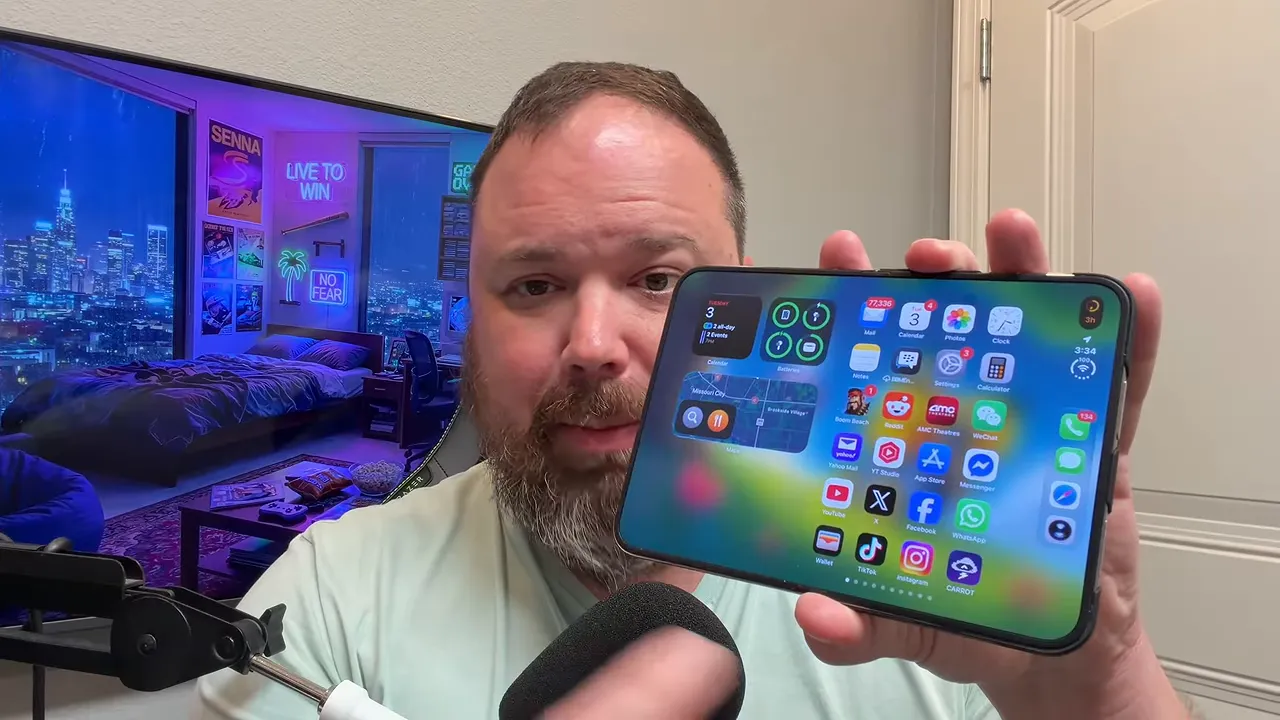
I also think Apple did a good job with the matte screen protector. Personally, I still prefer the glossy appearance of the Z Fold 8’s display. But preference and practical visibility are not always the same thing. In many situations, the Duo’s matte finish has a noticeable visibility advantage.
It is not perfect. Light can catch the surface at certain angles and wash out the image. Even so, I have found the screen very usable outdoors and excellent indoors. Its 3,000-nit brightness is perfectly fine for my use, and the interior display itself looks beautiful.
Better speakers and a smooth hinge
I think the Duo’s speakers sound better than the Fold 8’s. That is worth acknowledging in a device built around a larger screen and an expanded experience.
The hinge also feels nice and smooth. There are durability concerns to discuss, but the actual feel of opening and closing the phone is something Apple got right. It has its own character rather than feeling like a copy of somebody else’s foldable.
That carries through to the broader design. Despite Samsung’s long history in foldables and its role in making the display, this feels distinctly like an iPhone. The rounded appearance reminds me of the iPhone XS and XS Max era, and I like it.
Solid battery life and better cameras than I expected
Battery life has been solid. It gets me through the day, which is what I need from it.
The cameras also turned out better than the early criticism suggested. I think it takes pretty decent photos. Even the under-display camera, which I had criticized, looks much better than I expected.
That does not mean every concern disappeared. It means actually using the phone gave me a more positive impression than I had going in. Some areas fell short of my expectations, but others exceeded them.
A comfortable, recognizably Apple experience
I have found the form factor easy to hold one-handed, whether I am holding it open in different orientations or using the front display while it is folded.
General performance has been enjoyable, too. Although there are interface decisions that frustrate me, I have not found the core iOS experience overwhelmed with bugs. Those are two different issues: software can run reasonably well while still needing better design decisions for a folding screen.
Where the Duo Needs More Work
The Duo is a good phone, not a perfect one. There are some things Apple needs to tighten up, both through software and in future hardware.
The interface needs to use the screen better
I am not happy with every aspect of the toolbar and how it interacts with open apps. The way the interface handles the available screen space needs refinement.
App optimization is another unfinished piece. Developers are still adapting their apps to this device, and that takes time. Apple had the benefit of seeing what Samsung, OnePlus, Motorola, and Google had already tried, but it still needs developers to make its own experience work properly.
I expect this to improve. That is an expectation, though, not a reason to pretend everything is already optimized.
Touch ID has been frustrating
The Duo’s Touch ID experience has not been great for me. It can be finicky, and I prefer the authentication experience on the Fold, which also offers facial recognition.
Face ID would be a meaningful addition to a future Duo. I would like to see Apple bring it over, and I think it could become a compelling reason for some people to upgrade. But that is on my wish list, not a confirmed feature for the next model.
Screen and hinge concerns deserve attention
There have been reports of screen and hinge problems. My impression is that those issues affect a minority of owners, but they still matter, especially on a phone this expensive.
A hinge can feel excellent in use while there are still legitimate questions about long-term durability. Those observations are not contradictory.
If your display develops a problem that appears to be a manufacturing defect, take it to Apple for assessment rather than assuming it is something you have to live with. Apple also needs to address whatever is behind the first-generation failures people have experienced.
I expect a second-generation Duo to be more polished, with better app support and further hardware refinement. I also expect the current phone’s software to improve. Neither expectation changes the fact that buyers have to decide based on what is available today.
The $2,000 Foldable Reality
The iPhone Duo is expensive. At about $1,999, there is no reasonable way to call it a cheap phone.
But expensive and unusually priced are not the same thing. I had expected something closer to $2,499, so seeing it arrive around $1,999 struck me as fair within this particular market. That is not the same as saying it is affordable.
Samsung has been charging roughly this kind of money for folding phones for years. The Fold configuration discussed here reaches about $2,099, while alternatives such as the Pixel 11 Pro Fold and Motorola Razr Fold sit around $1,799. These are all premium purchases hovering near the $2,000 mark.
The big advantage on the Android side is that discounts can change the calculation substantially. Around the time of my comparison, Samsung had offered deals including:
- Roughly $250 off the phone.
- About $400 in extras or credit toward other products.
- Storage promotions offering as much as $400 in savings.
- Pricing around $1,650 without a trade-in, or trade-in credit reaching $800.
Those were changing promotions, not guaranteed prices, and they should not be assumed to stack together. The useful point is that the price you actually pay can be very different from the headline retail price.
Neither phone becomes inexpensive just because the other costs a similar amount. But dismissing the Duo solely because it costs around $2,000 ignores what this category already costs.
These Phones Serve Different Audiences
This is the part that gets lost when every conversation becomes “this one wins, that one loses.”
Most people interested in the iPhone Duo are probably existing iPhone users who have wanted a foldable for years. Most people considering the Z Fold 8 are probably already comfortable with Android. There is crossover, absolutely, but the audiences are not identical.
I have heard from people who had a Fold 8, preferred the Duo, and were happy switching. I have heard from more people who considered the Duo, chose the Fold 8, and loved their decision. Some have called Samsung’s phone their favorite phone ever or their phone of the year.
I understand that enthusiasm. The Fold 8 may very well deserve that kind of recognition. It still does not invalidate somebody else enjoying the Duo.
For someone who simply does not want Android, Samsung winning a feature comparison may not change anything. They were not going to buy the Fold in the first place. Now they can get a folding phone without leaving the ecosystem they want to use.
The reverse matters, too. An Android user who wants to try Apple now has a folding option rather than having to give up that form factor to switch.
People change platforms. Someone can drive a Ford for 20 years and decide to buy a Dodge. A lifelong PC user can buy a MacBook. Phone preferences are not lifetime contracts.
Why Apple’s Entry Is a Win Beyond Apple
As a tech enthusiast, I pay attention to this stuff constantly. It is easy to forget that plenty of people do not.
Some people only became aware of folding phones when the Duo arrived. Android manufacturers had been working on them for years, but those products were simply outside their attention.
Apple can put foldables on the map for that audience. That is valuable for the category, regardless of which phone I personally prefer.
I would not be surprised if the Duo outsells the Fold 8. That is a prediction, not verified sales data. More importantly, it would not prove the Duo is the better phone, just as Samsung making my preferred foldable would not make Apple’s product a failure.
One phone’s success does not have to diminish the other. They offer different software, different design decisions, and different ways into a folding-phone experience.
My verdict is still that the Galaxy Z Fold 8 is better overall. It has the benefit of years of refinement, and I prefer several important parts of using it. But after more than a week with the iPhone Duo, I also think Apple has delivered a genuinely good first folding phone.
You do not need your phone to win every comparison to enjoy owning it. More choice, another credible option, and a folding iPhone for people who have been waiting for one: that is where you win.
A Personal Thank You
On a personal note, thank you for the kindness toward my family. We recently had to say goodbye to our 14-year-old Doberman, who had been with us since shortly after my wife and I got married. She was part of our blended family from almost the very beginning, and losing her has been tough.
Our son also left for basic training the following day, so it has been an emotional stretch. The support and thoughtful messages have meant a great deal. After nine years of sharing this work, I am grateful for a community that has been there for my family through so much.


